
Physiotherapy during and after pregnancy
Although pregnancy is said to be the most beautiful period of a woman's life, movement difficulties often appear. This is caused by the shift of the centre of gravity, which changes the overall position of the spine and pelvis. At the same time, hormones loosen the ligaments, which then hold the body together less well. Despite these changes, it is possible to enjoy pregnancy without pain.
The aim of pregnancy physiotherapy is to teach the woman suitable exercises to keep her body fit throughout the pregnancy and to prepare her for childbirth so that it is smooth and without injury.
Physiotherapy also includes informing the woman about the possible after-effects of pregnancy (diastasis, urinary incontinence, flat feet…) and teaching her how to work with them.
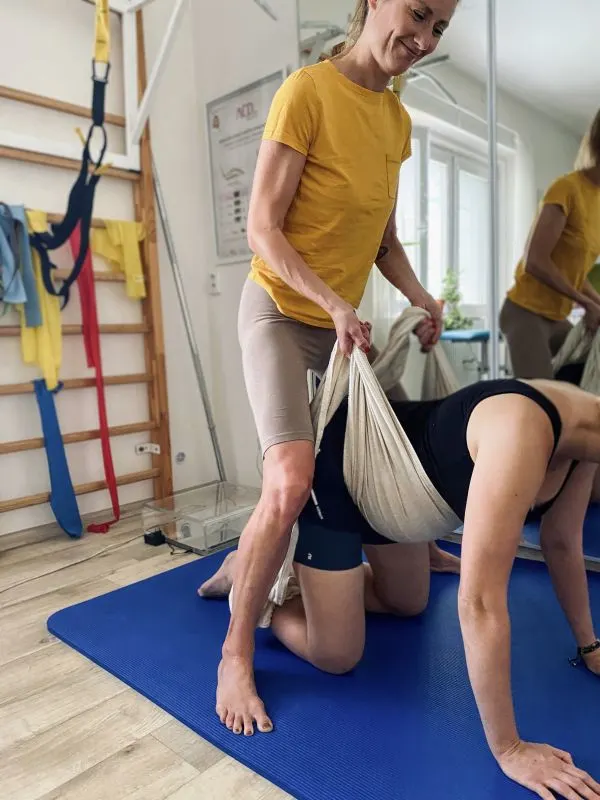
What do we most often work on?
During pregnancy:
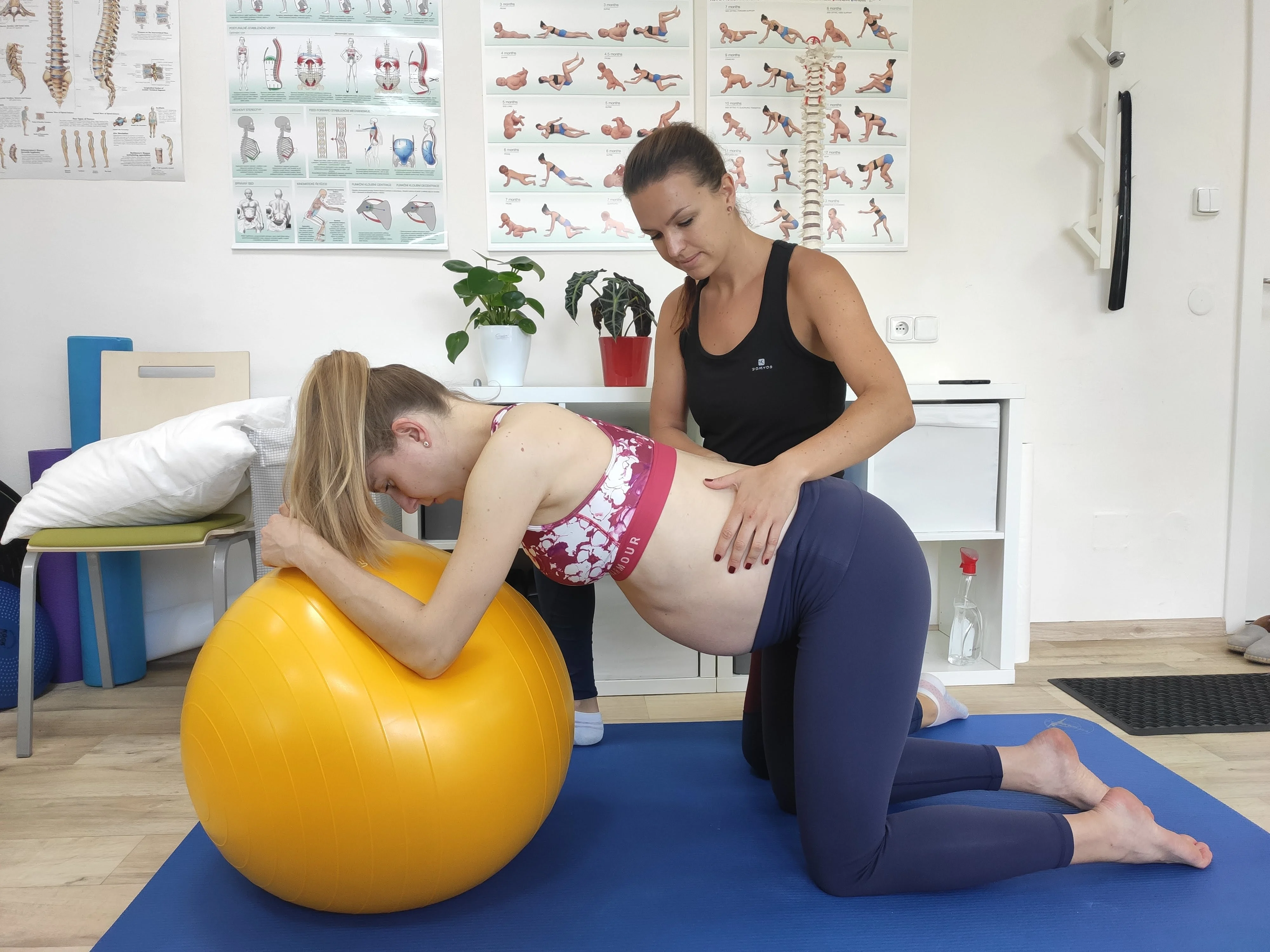
- relief from musculoskeletal pain (especially in the back, pelvis and tailbone, and the lower limbs),
- preparation for childbirth,
- recommendations for suitable physical activities and exercises,
- support of the foot arch function,
- lifestyle measures during pregnancy.
After childbirth:
- relief from musculoskeletal pain,
- education on the correct handling of the baby,
- restoring the correct function of the pelvic floor muscles,
- recommendations for exercises for correct abdominal muscle function (diastasis),
- instructions on suitable exercise and lifestyle measures in the postnatal period,
- a safe return to the physical activities you did before pregnancy.
How can physiotherapy help me after childbirth?
Postnatal physiotherapy focuses mainly on restoring the correct function of the muscle chain of the pelvic floor, diaphragm and abdominal muscles. Every birth is different and brings major changes – whether it was a natural birth or a caesarean section. In both cases the healing process takes place during the six-week postpartum period.
The postnatal period is demanding in every way, yet it is important to think about your own body and listen to it.
In the case of a natural birth, physiotherapy focuses on the pelvic floor and its correct awareness and engagement. We also work on correct posture, which in turn improves movement patterns and prevents unnecessary painful conditions.
Diastasis and separation of the abdominal muscles
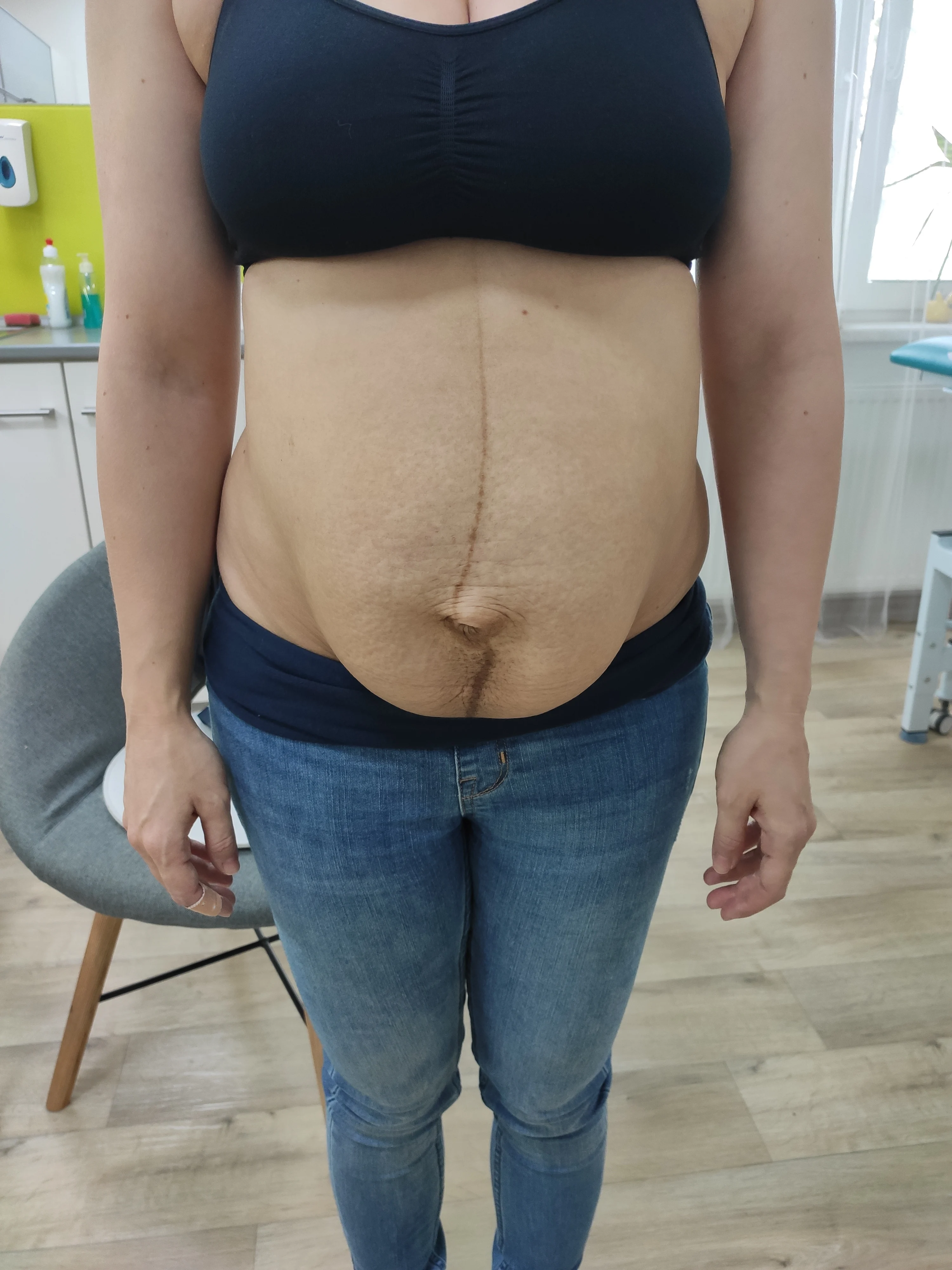
After childbirth your body has to cope with a new situation and start working as it did before pregnancy. One of the most common problems for new mothers is the separation, or diastasis, of the abdominal muscles. It most often arises due to the loosening of soft tissues.
That is why at ProPhysio we pay very close attention to the correct function of the abdominal muscles. The process of tackling diastasis begins with an initial examination – diagnostics – where we first determine whether you have diastasis and to what extent.
As part of the diastasis examination we carry out tests of the deep stabilising system, show and explain the function and importance of diaphragmatic breathing and correct engagement of the abdominal muscles, explain the mechanism of diastasis and its effect on the movement system, and the contraindications of certain exercises. We then recommend the next steps of rehabilitation and gradually teach you the exercises, so that later you will be able to exercise correctly at home as well.
ProPhysio – Your path to comfort and health
Book your session online today – we'll be happy to welcome you at one of our clinics in Brno.
Book a session online